Currently, after the events of November 2025, Guinea-Bissau is going through a period of political transformation. Since November 26, 2025, the country has been under the military control of the High Military Command for the Restoration of National Security and Public Order. Presidential and parliamentary elections scheduled for November 23, 2025, were interrupted due to the fact that military authorities announced a “conspiracy among some politicians with a well-known drug lord,” election manipulation, corruption and the need to restore “national security and public order.” New presidential and parliamentary elections are scheduled for December 6, 2026. As the interim president of the country for a period of 1 year, the military swears allegiance to General Horta-Inta-A Na Man (Horta N’Tam, Horta Nta Na Man), the chief of the General Staff of the armed forces. A new Prime Minister has also been appointed – Ilidio Vieira Te, who previously served as Minister of Finance.
Since the early 2000s, a number of international organizations (United Nations Office on Drugs and Crime), think tanks (Global Initiative Against Transnational Organized Crime) and government agencies (Drug Enforcement Administration, USA) have identified Guinea-Bissau in their reports as a territory vulnerable to being used as a transit hub by international criminal networks. The volume of prohibited substances (narcotic drugs, psychotropic substances and their precursors) passing through the country is comparable in monetary terms to its GDP.
Since independence in 1974, the country has experienced at least seven (7) serious attempted or successful coups d’état.
The combination of political instability, weak state institutions, the presence of ideal conditions for the transit of illegal substances between Brazil, Venezuela, Colombia and Western Europe (Portugal, Spain and France), as well as the lack of complete control over the islands of the Bijagos Archipelago create attractive conditions for the activities of South American criminal communities. Thus, the Bijagos Archipelago consists of more than 80 islands, many of which are uninhabited and where there is no permanent government control. Unfortunately, this makes it possible to receive small planes, ships and engage in the hidden storage and transfer of prohibited substances. The story of the unifying Portuguese language plays a significant role in this. Guinea-Bissau is part of the Lusophone world (Portuguese-speaking countries). As stated, Brazil is a major transit supplier of these substances, and Portugal is the “gateway” to the European Union.
At the same time, taking into account the current situation, guided exclusively by humanitarian considerations, the G3 Association, together with representatives of the International Non-Profit Organization of Russian-African Humanitarian, Economic and Sports Cooperation (RUSAFRIC) from Guinea (Conakry), headed by Ms. Mballou Camara, accepted an invitation from the country’s national Ministry of Defense to visit Guinea-Bissau from March 3 to March 9, 2026, including with the aim of working on the issue of integrating the authoring system close combat “Golden Triangle System” into the educational system for training members of the armed forces.
During your stay in the capital of the country, Bissau:
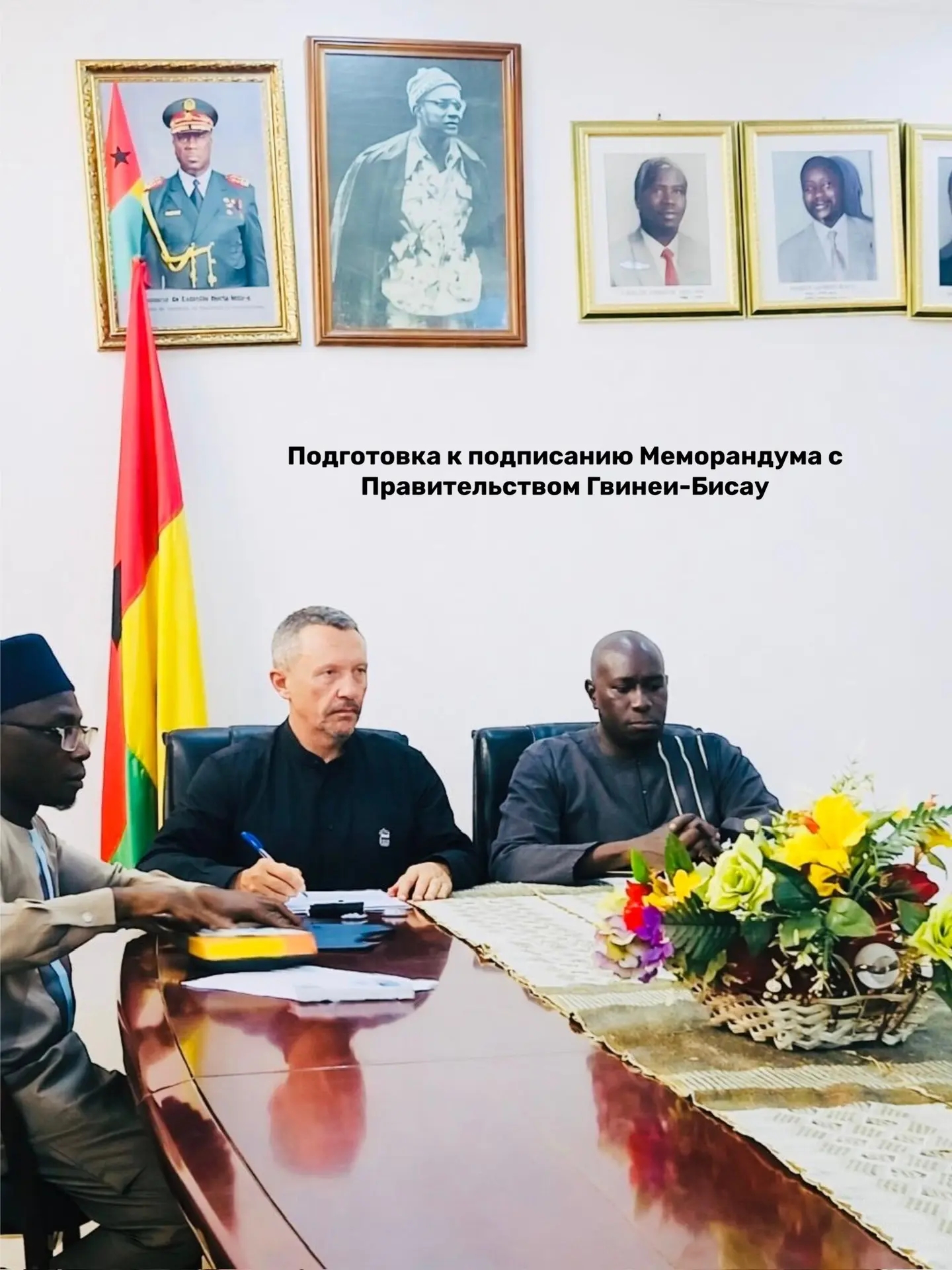
1. A Memorandum of Understanding was signed between the National Ministry of Defense, represented by Major General Seve Lassana Manssaly, and the International Association of Security Experts “G3”, represented by the Chairman of the Board, Alexander Gennadievich Shlychkov.
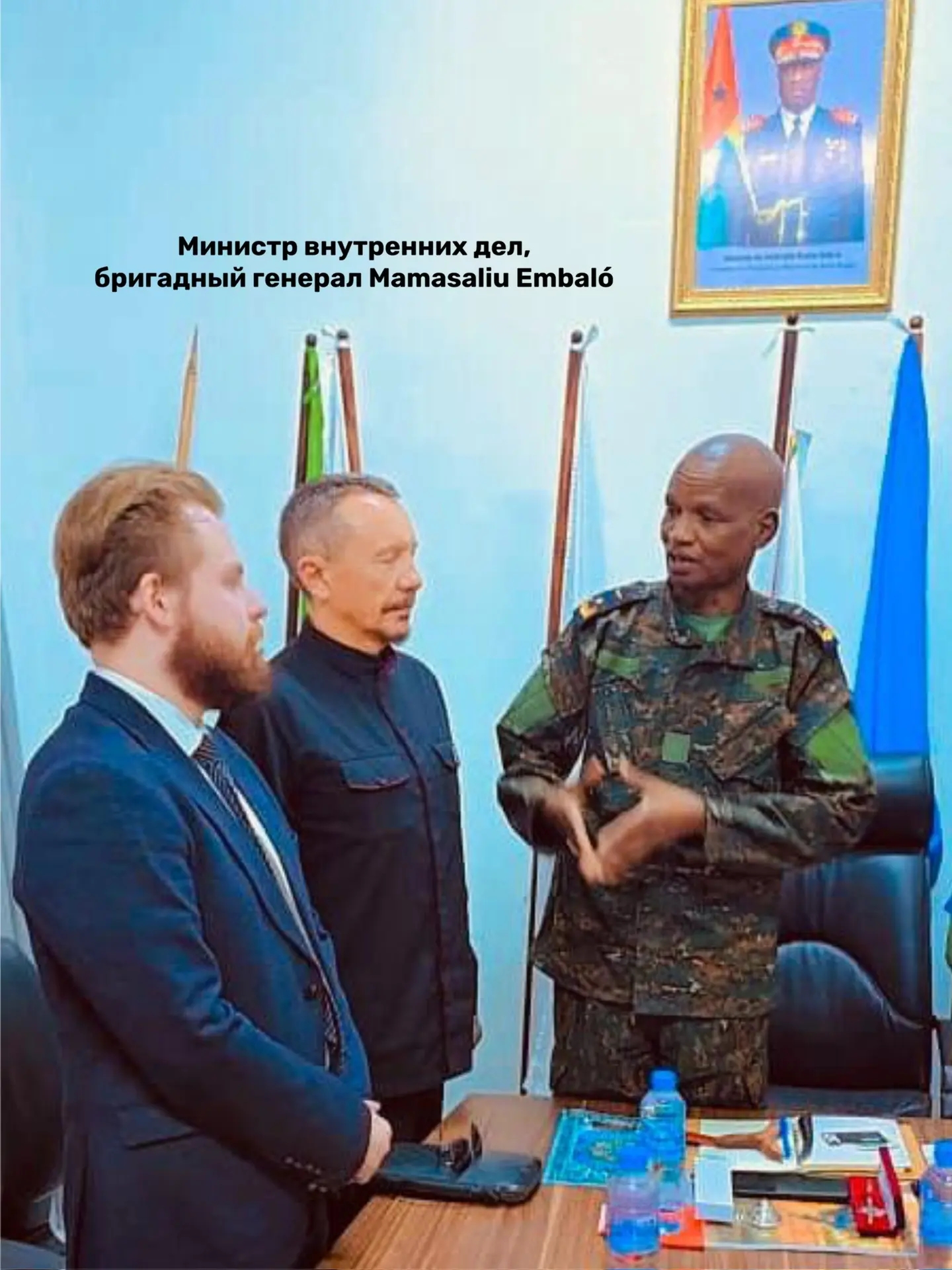
2. A meeting was held with the Minister of Internal Affairs and Public Order, Brigadier General Mamasaliu Embalo and his deputies, during which a presentation of the close combat system “Golden Triangle System” and the activities of the G3 Association in the field of strengthening security and law and order were presented. Work continues to identify areas of activity where the experience of the G3 Association is in first demand and can be successfully applied. It is also planned to jointly construct and operate a “Special Training Center”, taking into account the experience of “Melee Combat Studios” in Russia (the author’s direction of the fitness format).
3. A meeting was held with the Minister of Social Communication Abduramane Ture. During the meeting, issues of combating fakes and disinformation, crisis communications and cooperation with international organizations in the field of media were discussed.
4. A meeting was held with the Government of Guinea-Bissau, following which a Memorandum of Understanding was signed between the Government of Guinea-Bissau represented by the Minister of Agriculture and Rural Development Amadu Uri Guisse and the International Non-Profit Organization of Russian-African Humanitarian, Economic and Sports Cooperation (RUSAFRIC) represented by its co-chairman, Candidate of Pedagogical Sciences Alexander Shlychkov.
5. A meeting was held with the Minister of Foreign Affairs, International Cooperation and Communities Joao Bernardo Vieira. Issues of the current international situation, the role of the international community in overcoming the political crisis and expanding bilateral ties between Guinea-Bissau and Russia were discussed.
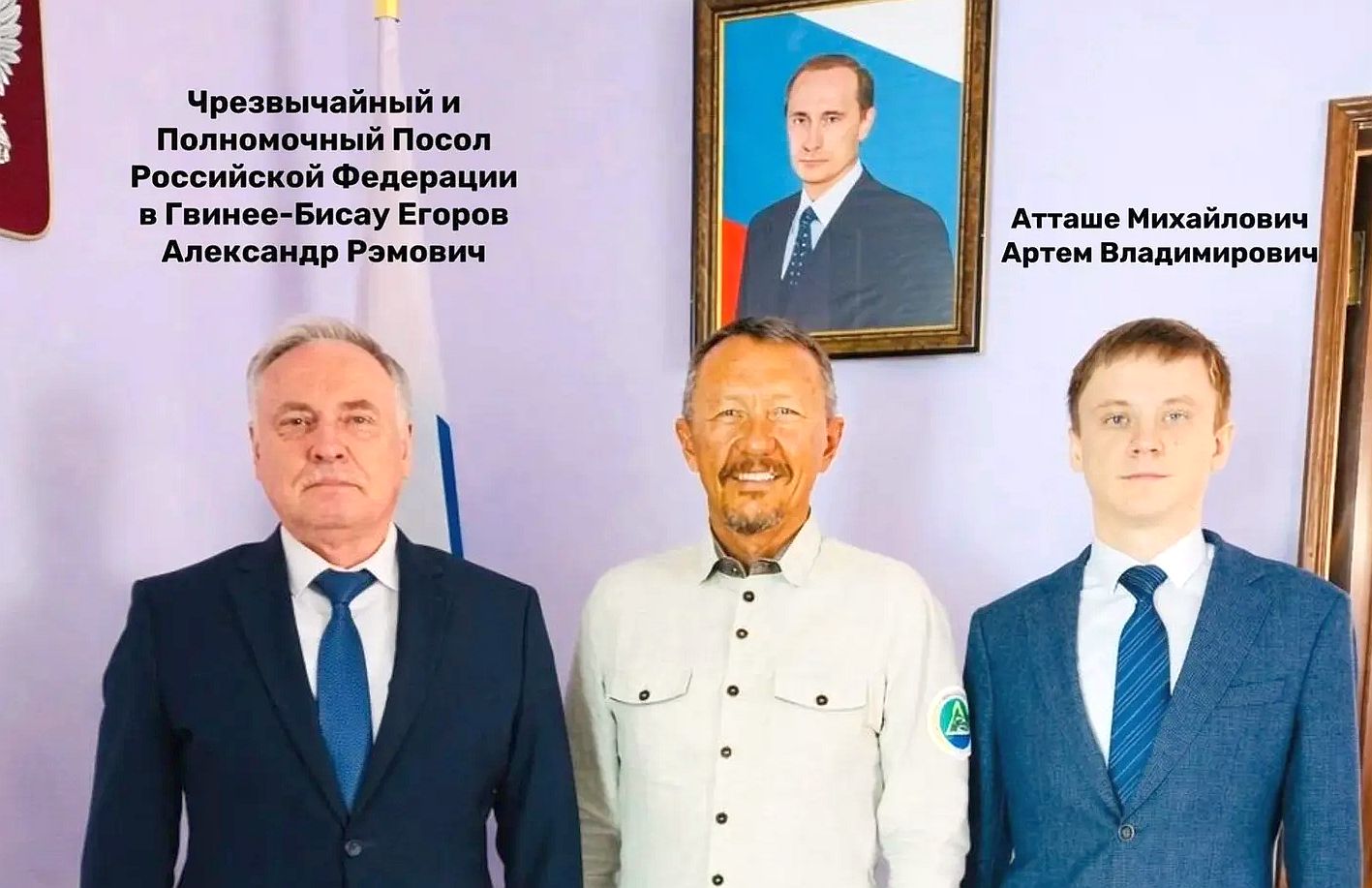
Special place and attention must be given to the significant support of the visit from the Russian Embassy in Guinea-Bissau in the person of the Ambassador Extraordinary and Plenipotentiary of Russia to Guinea-Bissau Alexander Removich Egorov. His academic knowledge about the culture and history of the peoples inhabiting Guinea-Bissau, his vast experience as a diplomat in this country and the impeccable work of the Embassy staff evoke worthy respect.
The visit was aimed at developing expert dialogue and sharing experience in the field of security, educational programs and cultural communications.